
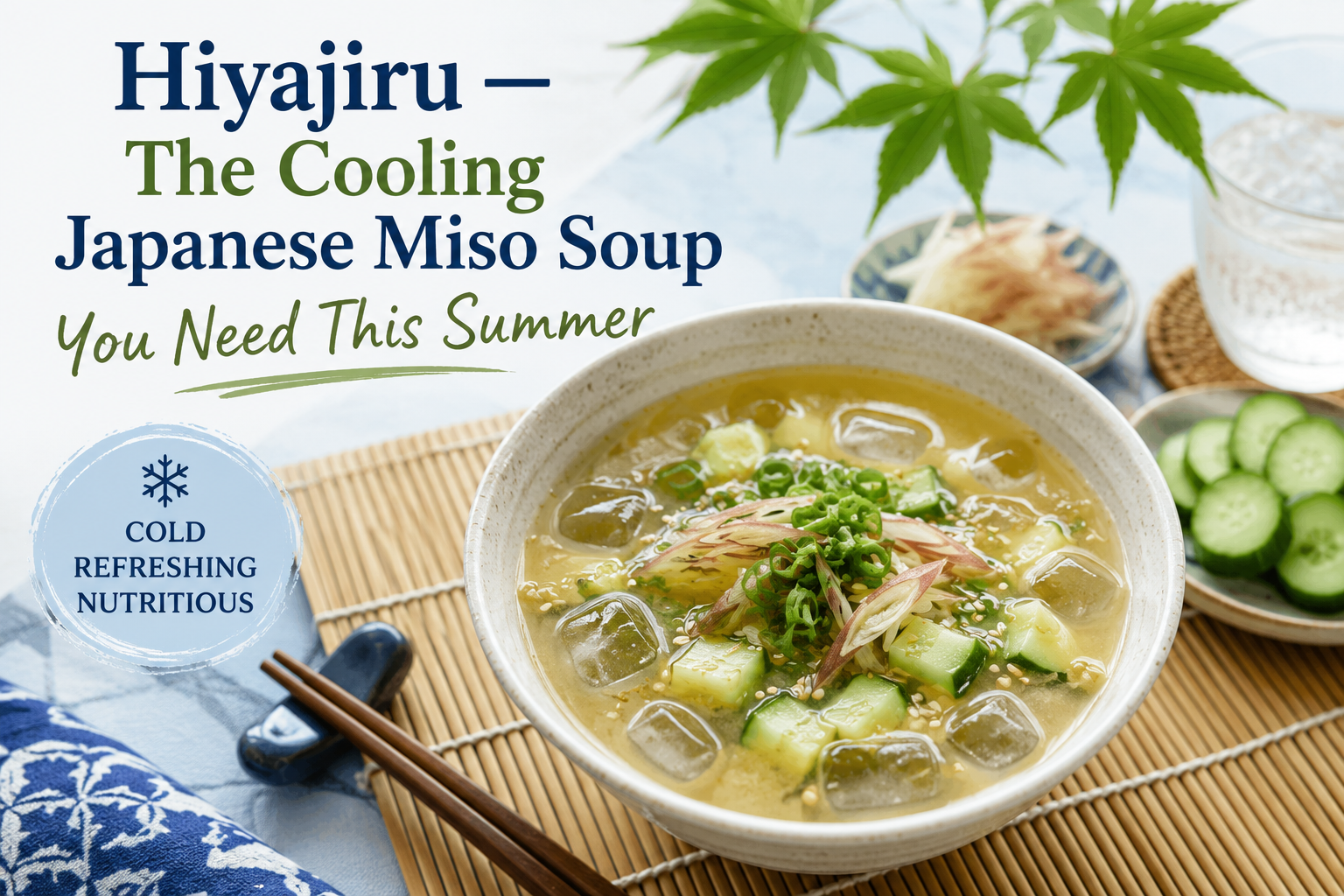
In Japan, it’s called Hiyajiru — a chilled miso soup that’s the perfect antidote to a scorching summer day. Rich and savory despite being served cold, it comes together with fresh seasonal vegetables and a grilled protein of your choice, all in about 20 minutes. Easily made vegan.
What makes it special is how rare it is for a cold soup to be both light and genuinely filling. That’s the magic of hiyajiru. Here’s everything you need to know.
Why You Should Make This Cold Miso Soup
- Cold, refreshing, and nutritious — loaded with vitamins, probiotics, fiber, omega-3 fatty acids, and protein. A truly wholesome meal for hot days.
- Effortless to make — it’s built to use up leftovers.
- Highly versatile — customize it with whatever toppings you have on hand.
- Vegan-friendly — use kombu dashi and top with pan-fried tofu or mushrooms instead of fish.
What Is Hiyajiru? A Regional Dish from Miyazaki
Hiyajiru (冷や汁) is a chilled, miso-based soup built around summer ingredients like cucumber, shiso (perilla leaf), and myoga ginger, along with grilled fish and tofu for protein. It’s usually served with or poured over steamed rice — a perfect way to revive a flagging appetite during Japan’s brutal summers.
The dish traces back to Miyazaki Prefecture in southwestern Japan and has been around since the late 12th century (the Kamakura era), when it sustained farmers working the fields and soldiers on the battlefront.
Because it comes together quickly using leftover grilled fish or tofu, it’s a go-to no-fuss meal for the height of summer.
Ingredients You’ll Need
- Dashi (Japanese stock) — a quick dashi packet works fine, or use kombu dashi for a fully plant-based version.
- Miso paste — red, white, or mixed (awase) miso all work; try blending two types for extra depth.
- Toasted sesame seeds — white or a mix of white and black for visual contrast.
- Tofu — silken for a smoother finish, or firm/grilled for more texture.
- Grilled protein — salmon, mackerel, or saba are classic, but grilled shrimp or leftover chicken work well too.
- Cucumber — thinly sliced, salted briefly to keep it crisp.
- Shiso leaves or scallions — for a fresh, herbal top note.
- Myoga ginger (optional) — adds a sharp, aromatic bite if you can find it.
- Toasted nori strips (optional, new addition) — a bit of umami and crunch on top.
- Grated fresh ginger (optional, new addition) — for a little extra warmth against the cold broth.
Substitutions: Treat this soup as a blank canvas. No salmon? Try another grilled fish, shrimp, or any leftover cooked protein like grilled chicken.
Cooking Steps
- Start with the stock: Prepare your dashi ahead of time and pop it in the fridge — it needs to be fully cold before it meets the miso, or the flavors won’t come together properly.
- Deepen the miso’s flavor: Spread the miso thinly on a tray and run it under the broiler for a couple of minutes, just until you see light charring at the edges. This isn’t just aesthetic — it toasts out the raw edge and adds a smoky depth you can’t get any other way. Let it cool fully before moving on.
- Build the flavor base: Toast your sesame seeds in a dry pan until fragrant, then crush them lightly with a mortar and pestle or the flat of a knife — this releases more oil and flavor than using them whole. Stir the cooled miso into the crushed seeds until you have a thick paste.
- Loosen it slowly: Add the chilled dashi to the miso-sesame paste a splash at a time, stirring continuously. Rushing this step is the most common mistake — add the liquid too fast and you’ll end up with stubborn miso lumps that won’t smooth out.
- Prep your toppings while the base chills: Salt your cucumber slices and let them sit in a colander for a few minutes to release excess water, then pat dry. Flake your grilled fish, cube your tofu, and slice your shiso.
- Assemble and finish: Ladle the miso broth into bowls, then layer in the cucumber, tofu, fish, and herbs. Finish with a scatter of sesame seeds, and nori or fresh grated ginger if using.
- Serve : Pour it over a bowl of warm or chilled steamed rice, or serve the rice on the side for dipping.
Important Tips for the Best Cold Miso Soup
Before anything else, remember that miso hates being rushed — stir it into a splash of dashi first until smooth, then loosen it with the rest, or you’ll spend forever chasing lumps. While that’s coming together, give your cucumber a quick spa treatment: a pinch of salt, a few minutes to rest, then pat it dry so it stays crisp instead of watery. If you have two minutes to spare, toast the miso — it’s a small step that turns a fine soup into a genuinely craveable one. And whatever you do, taste as you go, since miso brands swing wildly from mellow to salty, and a quick sip now saves you from an oversalted bowl later.