
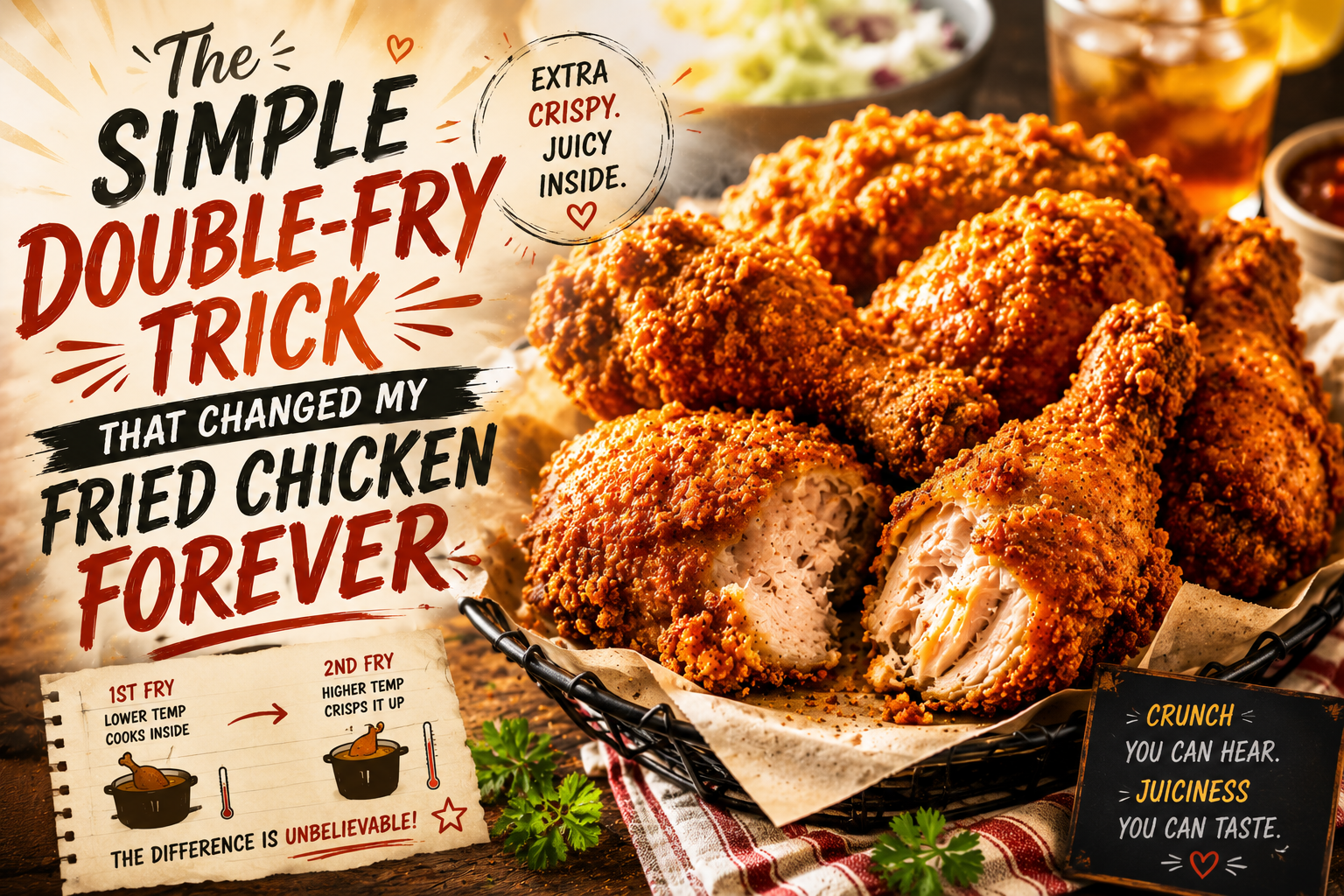
Ask anyone what makes great fried chicken, and they’ll say the same thing – an audible, shatteringly crisp crust and juicy, tender meat inside. But getting both at the same time? That’s the tricky part.
The challenge is that the outside and inside cook at different speeds. The crust, exposed directly to hot oil, crisps and browns quickly. The meat underneath takes longer to cook through. So you end up with golden chicken that’s still raw inside, or perfectly cooked meat with a crust that’s gone too far.
Double-frying is the professional cook’s solution. It’s not extra work – it’s extra control. By breaking the frying process into two stages, you give yourself the power to nail both the crust and the meat perfectly. The first fry cooks the chicken through at a gentler temperature. A resting period lets steam escape and the exterior dry out. The second fry, at higher heat, crisps that dried crust to golden perfection in just minutes – without overcooking the meat.
This isn’t just a recipe – it’s a technique that gives you flexibility, consistency, and the kind of crispy chicken that stays crunchy long after it leaves the oil. Whether you’re cooking for a crowd, prepping ahead, or just chasing that perfect bite, double-frying is the trick you didn’t know you needed.
Why Double-Frying Works
- The moisture problem: Chicken skin is full of water. That water has to cook off before the surface can truly crisp and brown. In a single fry, you’re fighting against time – the meat is cooking while the moisture is escaping.
- Two stages, one solution: The first fry cooks the meat through and sets the crust (it’ll be pale, and that’s fine). During the rest, steam escapes and the surface dries. The second fry, at a higher temperature, crisps that dried crust in just a few minutes – no waiting for moisture to evaporate, no overcooking the meat.
- The result: A crust that’s deeply golden, audibly crisp, and stays that way longer – even under sauce.
What You’ll Need
For the Chicken:
- Bone-in, skin-on chicken pieces (thighs, drumsticks, breasts – your choice)
- Buttermilk for marinating (optional but recommended)
- Your favourite fried chicken seasoning
For the Coating:
- All-purpose flour
- Cornflour (cornstarch) – for extra crunch
- Seasonings of your choice
For Frying:
- Neutral oil with a high smoke point (peanut, canola, vegetable)
How to Double-Fry Chicken
Stage 1: The First Fry
- Heat your oil to 163–177°C (325–350°F).
- Fry the chicken until it’s cooked through – use a thermometer to check:
- White meat (breasts): 70°C (155°F)
- Dark meat (thighs, drumsticks): 79–85°C (175–185°F)
- The crust should be pale golden – not deeply coloured yet.
- Transfer to a wire rack and let it rest.
Stage 2: The Rest
- Let the chicken rest at room temperature for at least 30 minutes – up to 2 hours.
- This allows steam to escape and the crust to dry out.
- For even better results: cool completely and refrigerate uncovered overnight.
Stage 3: The Second Fry
- Bring your oil up to 177–191°C (350–375°F) – slightly hotter than the first fry.
- Return the chicken to the oil and fry for 3–5 minutes.
- The crust will turn a deep, rich golden brown and sound audibly crisp.
- Drain on a wire rack and serve immediately.
Timing Flexibility
Double-frying gives you a built-in buffer between cooking and serving. This makes it perfect for:
- Batch cooking – Fry once ahead of time, hold at room temperature, finish just before serving.
- Parties – No last-minute rush. Pre-cook, then crisp up when guests arrive.
- Large groups – Keep pieces warm in a low oven after the second fry if you’re cooking multiple batches.
💡 Pro Tips for Best Results
1. Let it rest. This is the most important part of the process. Even 30 minutes makes a huge difference. Overnight is even better.
2. Use a thermometer. Oil temperature and meat temperature are the two things that separate great fried chicken from mediocre.
3. Don’t crowd the pot. Overcrowding drops the oil temperature and leads to greasy chicken. Work in batches.
4. Double-fry also revives leftovers. A quick second trip through hot oil restores that fresh-fried crunch like nothing else.
5. Sauce it up. A well-dried, extra-crispy crust holds up better under sauce – staying crunchy longer instead of turning soggy.
When to Double-Fry
Double-fry when:
- You want shatteringly crisp crust
- You’re cooking for a crowd
- You need flexibility in timing
- You’re planning to sauce the chicken
- You want to reheat leftovers perfectly
Single fry is fine when:
- You’re serving immediately
- You don’t mind a less audibly crisp crust
- You’re short on time
✨ The Takeaway
Great fried chicken is all about that perfect balance – crisp crust, juicy meat. Double-frying doesn’t eliminate the challenge, but it makes it much easier to control. Fry once to cook it through. Let it rest so moisture can escape. Fry again to lock in that crisp, golden crust.
It’s an extra step, but once you’ve tried it, you’ll wonder why you ever fried any other way. Crispier chicken, juicier meat, and the freedom to cook on your schedule. That’s the professional secret – now it’s yours.